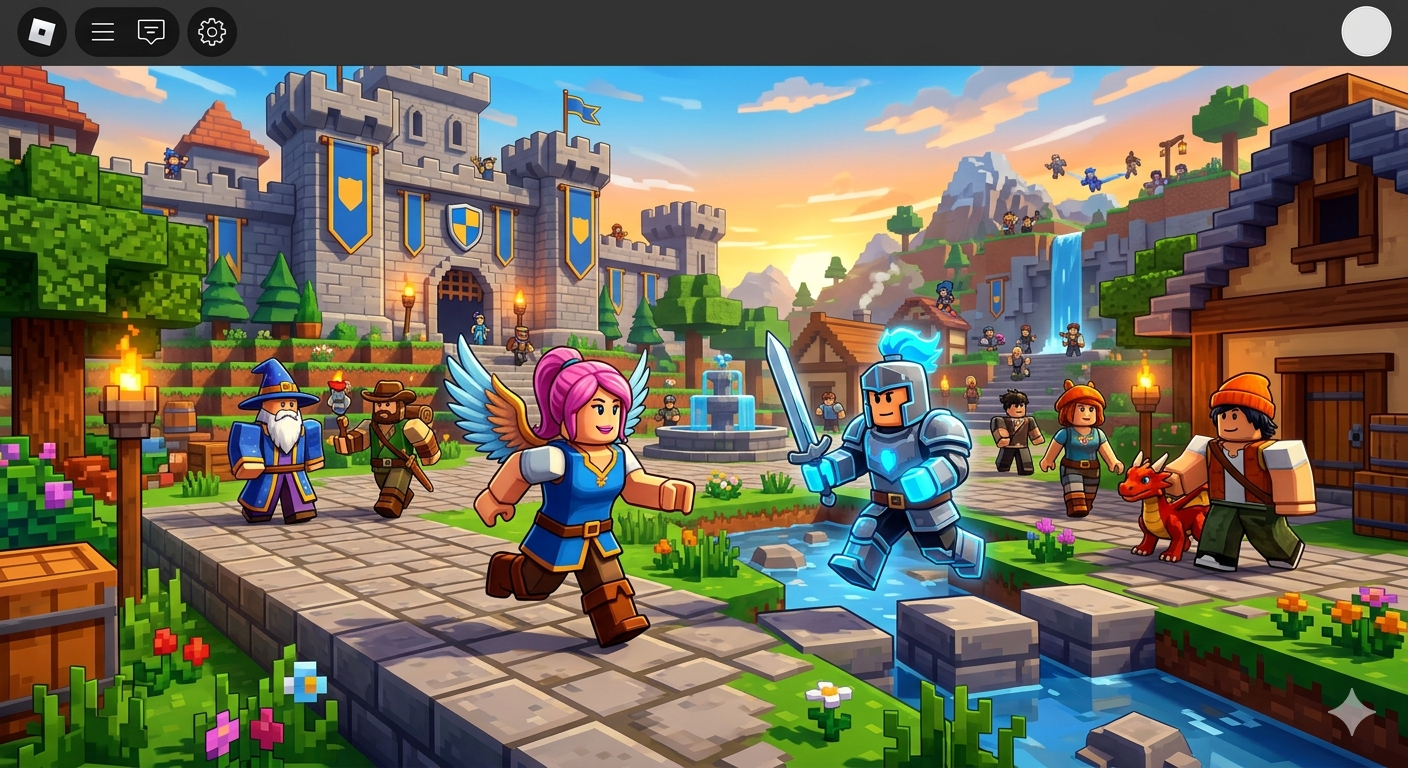
When you play on Roblox, it feels like you’re just having fun, jumping between games, customizing your avatar, and exploring new experiences. But underneath all that, something interesting is happening. You’re constantly making decisions. Small ones, quick ones, sometimes even impulsive ones. And over time, these choices quietly shape how you think, react, and decide, not just in the game, but outside it too.
Every Game Starts With a Choice
The moment you open Roblox, you’re already making your first decision: what to play.
There are thousands of options, each promising something different. Some are fast-paced, some are relaxing, some are competitive, and others are purely social. You scroll, you look at thumbnails, you check player counts, and within seconds, you pick something.
At first, this feels random. But over time, your choices become more intentional. You start to notice patterns in your behavior. You might prefer games that:
- Give quick rewards
- Feel easy to jump into
- Have a large number of active players
- Match your mood at that moment
Without realizing it, you’re learning how to evaluate options quickly. You’re filtering information, weighing your preferences, and making decisions based on past experiences. That’s a real-world skill—just happening in a game environment.
Learning to Balance Fun and Effort
Once you’re inside a game, another layer of decision-making begins. You’re constantly choosing how much effort you want to put in.
Some games require grinding, repeating actions to earn rewards slowly. Others offer shortcuts through upgrades or purchases. And every time you face that choice, you’re deciding:
- Should I spend time or take the faster route?
- Is this reward worth the effort?
- Do I enjoy the process, or just the result?
These questions might not form clearly in your mind, but your actions answer them anyway.
Over time, you develop a sense of balance. You learn when it’s worth putting in effort and when it’s better to move on. This is the same kind of thinking people use in real life when deciding how to spend time, energy, or money.
The Subtle Art of Spending Decisions
One of the most obvious ways Roblox teaches decision-making is through spending Robux.
At some point, you’ll come across something you want, an item, a game pass, or a feature that promises to improve your experience. And then comes the decision:
Do I really need this?
This moment is more important than it seems.
You’re not just choosing whether to spend, you’re evaluating value. You’re thinking about:
- What you gain from the purchase
- Whether it’s worth the cost
- How long the benefit will last
Sometimes you decide quickly. Other times, you hesitate. You might even regret a purchase later and think, “That wasn’t really worth it.”
And that’s part of the learning process.
Mistakes teach you just as much as good decisions. Over time, you become more aware of what actually adds value to your experience, and what just feels tempting in the moment.
Adapting Your Strategy as You Go
Many Roblox games involve progression. You start with very little and gradually build your way up—earning currency, unlocking items, and improving your position.
But there’s rarely just one way to progress.
You can take different paths, try different strategies, and adjust your approach depending on what works. This creates a constant loop of decision-making:
- Should I upgrade now or save for something better?
- Is this strategy efficient, or should I try something else?
- Am I moving forward, or just repeating the same actions?
At first, you might make random choices. But as you play more, your decisions become more calculated.
You start thinking ahead. You plan. You anticipate outcomes.
This is how decision-making evolves, from reacting in the moment to thinking more strategically over time.
Dealing With Uncertainty
Not every decision in Roblox has a clear outcome.
Sometimes you’re unsure if a game will be fun. Sometimes you don’t know if an item is worth buying. Sometimes you try something new and it doesn’t go as expected.
This uncertainty is actually a key part of learning.
You begin to understand that not every choice will be perfect—and that’s okay. You learn to take small risks, test things out, and adjust based on the results.
In real life, decision-making often works the same way. You don’t always have complete information. You make the best choice you can, then adapt if needed.
Roblox gives you a low-risk space to practice that.
The Influence of Other Players
Your decisions in Roblox are also shaped by what you see others doing.
If a lot of players are using a certain item, you might consider getting it too. If a game is trending, you might feel drawn to try it. If someone progresses faster, you might rethink your own approach.
This introduces another layer of decision-making: social influence.
You learn to ask yourself:
- Am I choosing this because I want it, or because others have it?
- Is this trend actually worth following?
- Does this decision fit my play style?
These questions don’t always happen consciously, but they influence your behavior.
Over time, you get better at recognizing when you’re making independent choices and when you’re being influenced by others.
Managing Impulse vs Patience
One of the biggest lessons Roblox teaches is the difference between impulse and patience.
You’ll often face moments where you want something immediately—a new item, a faster upgrade, or a shortcut. The option is there, and it’s tempting.
But waiting is always an alternative.
You can choose to:
- Save up instead of spending quickly
- Earn rewards slowly instead of rushing
- Think before acting instead of reacting instantly
At first, it’s easy to give in to impulse. But over time, you start noticing patterns.
- Quick decisions don’t always feel satisfying later
- Waiting sometimes leads to better outcomes
- Patience can be more rewarding than speed
This is a powerful skill, one that applies far beyond gaming.
Learning From Your Own Patterns
The more you play, the more you start recognizing your own decision-making habits.
You might notice that you:
- Often choose what’s popular
- Prefer quick rewards over long-term progress
- Spend more when something feels limited
- Change strategies frequently or stick to one approach
These patterns reveal how you think and act.
And once you notice them, you have the opportunity to adjust.
You can become more intentional with your choices. You can experiment with different approaches. You can challenge your own habits.
That’s how decision-making improves, not by avoiding mistakes, but by understanding them.
Turning Play Into Awareness
The most interesting part of all this is that it happens without pressure.
Roblox doesn’t tell you that you’re learning decision-making skills. It doesn’t guide you step-by-step. It simply creates an environment where choices are constantly required.
And because it’s fun, you engage with those choices naturally.
You don’t feel like you’re practicing a skill, but you are.
Every time you:
- Pick a game
- Decide how to play
- Choose what to buy
- Adjust your strategy
You’re strengthening your ability to make decisions.
Final Thoughts
Roblox might feel like pure entertainment, but it quietly trains you to make decisions every time you play. From choosing games to managing time, effort, and spending, you’re constantly learning what works and what doesn’t. Over time, these small choices build awareness, patience, and strategy. And without even realizing it, you’re developing a skill that stays with you, helping you make better, more thoughtful decisions beyond the game.